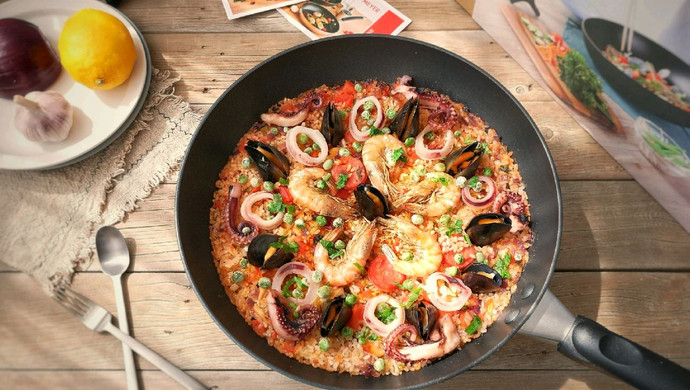
Paella
Paella, or Paella, is a slogan that many Paella sellers will say. Fill the whole ocean into your bowl. At first glance, it seems a bit exaggerated, but if you think about it, you have to agree, the staple food also has vegetables and a lot of marine protein, and there is no delicacy that can match this satisfaction. The modern paella actually originated on the shores of a freshwater lake in Valencia, so the original version was without seafood. After the end of the labor, the local farmers took a large and light pan to light a fire on the edge of the field to cook, put the pot on the burning wood, used the rice grown in the rice field, stir-fried the fresh vegetables in the field, added rice and water, added a little saffron and bell pepper powder to make the rice more colorful and delicious, and the meat was taken from the local material, and the hares and snails in the field were caught and thrown into the pot. Such a pot of food that resembles a hodgepodge tastes amazing. Since then, the meal has been spread by everyone, and different versions have been derived from various places. As a dish that originated in the folk, even though the dish was very delicious, it was still looked down upon by the nobility. At that time, the staple food of the Spanish aristocracy was beans, which were low in yield and expensive, which was very much in line with the special habits of the nobility. The nobles also believed that rice was planted in paddy fields, which were prone to breeding mosquitoes and locusts, and mosquitoes were very easy to spread malaria, so they always associated rice with poverty and disease, believing that eating rice would be harmful to health. The nobles were also quite particular about the way they cooked beans, first adding ham bones to the pot, and then stewing the beans in broth, and the beans tasted very good. However, beans are difficult to chew and digest, and it is easy to make people’s abdomen bloated, which is not a good choice as a staple food, only rice, an easy-to-digest food, is suitable as a staple food. Over time, the nobles were also amazed by the deliciousness of paella and were willing to eat rice as a staple food. Throughout Spain, paella cooking methods are widely spread, and after continuous improvement, the taste is getting better and better. Now when cooking paella, add white wine and broth, the rice will be slightly sour and sweet. Of course, the most important improvement is the addition of seafood, most paella will definitely add mussels, scallops and shrimp. However, for a long time, everyone has ignored the Spanish scarlet shrimp, which is the best of Spain’s native shrimp, and its sweetness has surpassed that of lobsters and prawns, and it has been used as bait for fishing before, and people have not considered it as food. It wasn’t until people discovered its deliciousness that its value began to increase dramatically. The shellfish added when cooking paella will slowly open and release sweet juices full of seawater flavor, which make paella even more delicious. And there are many interesting legends about Paella. Legend 1: The English name of paella is Paella, but it is said that the earliest Paella was not made with seafood. There are several theories about the origin of Paella. One theory is that the word Paella comes from a small seaport on the east coast of Spain called Valencian, which means pot in the local language. Merchants at the local seaport used to set up a cauldron over a campfire, throw rice and ingredients into it to cook together, and then use a wooden spoon to take food directly from the pot. Chef making paella Chef making paella Valencian is famous for its cargo port, but there is a lack of fishing grounds nearby, so seafood is not cheap. In the old days, even when it was time for celebrations, the best ingredients were rabbit and wild duck, and occasionally chicken. So what are the main ingredients? You must not have thought that it is the cheapest local meat – snails. So the claim that Paella was paella is just a rumor. Legend 2: Another theory is that in the 15th century, Columbus was hit by a hurricane while sailing and escaped to a small island, and local fishermen made a hodgepodge of seafood and rice, saving Columbus’s life from hunger and cold. Later, when Columbus returned to Spain, he told the king about it, and the king ordered the palace chef to go to the island to learn to make paella, and the palace would use paella to entertain the most distinguished guests. In this way, paella moved from the fisherman’s table to the king’s banquet, and since then, paella has become the “national dish” of Spain As a diet that is not often found on our daily table It’s also very good to make it once in a while, today Sister will share with you how to make this paella, just a few steps, you can eat a delicious meal at home!
How to make paella
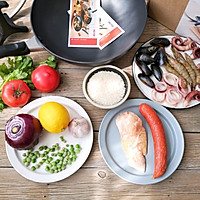
Step 1
Prepare the ingredients. Paella is made from Spanish rice, if you can’t buy it, try to choose good quality rice to make it. Also, since the rice used for this meal cannot be washed, it is recommended that you choose rice marked with the no-wash sign.
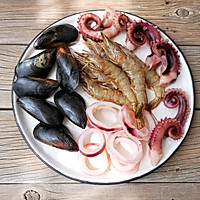
Step 2
Seafood can be matched at will, but shrimp must be there, and if there are no mussels, clams can also be used.
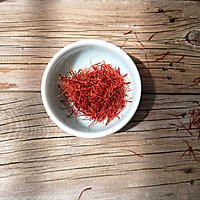
Step 3
Saffron is an indispensable and important ingredient for this paella, the soul of paella, and if you have eaten paella with saffron, you can remember its taste at once.
Step 4
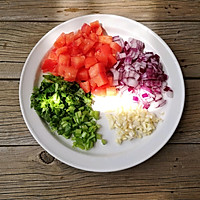
Dice the tomato, onion, mince the garlic and parsley.
Step 5
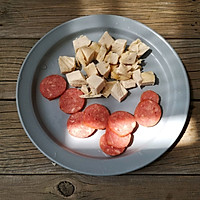
Blanch the chicken breast in water and cut into small pieces, and slice the Spanish sausage.
Step 6
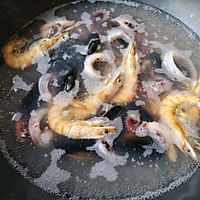
Blanch the seafood in boiling water for about 1 minute.
Step 7
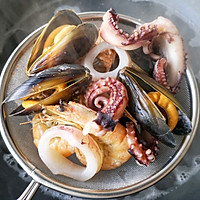
Drain the mussels as soon as they open, and leave the seafood soup for later use.
Step 8
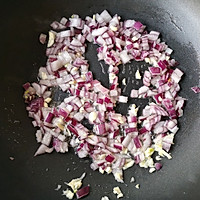
Heat an appropriate amount of olive oil in a pot, add onion and minced garlic and stir-fry until fragrant.
Step 9
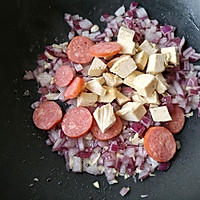
Stir-fry the red sausage and chicken evenly.
Step 10
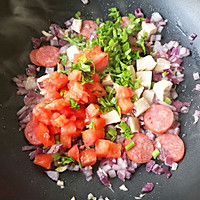
Lower the tomato chunks and parsley.
Step 11
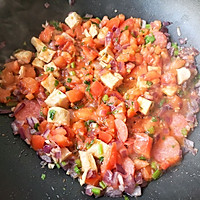
Sauté the tomatoes into a sauce.
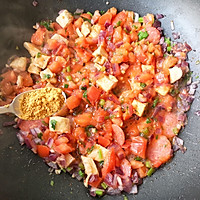
Step 12
Add a spoonful of ground sweet paprika.
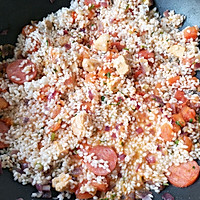
Step 13
Add rice and stir-fry evenly.
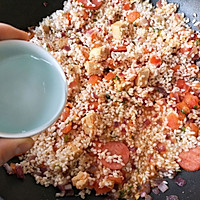
Step 14
Add the white wine and stir-fry.
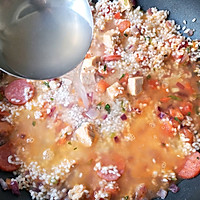
Step 15
After the alcohol evaporates, pour in the broth, and the soup noodles should just soak the rice.
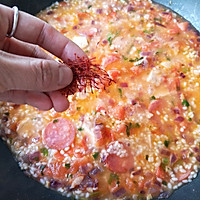
Step 16
Add an appropriate amount of saffron.
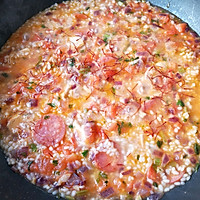
Step 17
Add in the amount of 3-5 sticks per person.
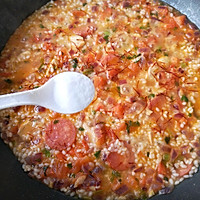
Step 18
Add salt to taste.
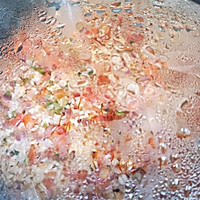
Step 19
Cover and simmer for 15-20 minutes, without turning to allow the seafood flavor to blend into the rice.
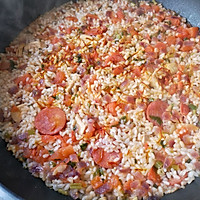
Step 20
When the moisture is basically not visible, open the lid.
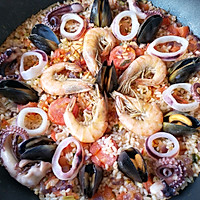
Step 21
Spread all the seafood evenly on the rice and press down gently until it is half buried in the rice.
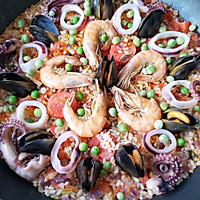
Step 22
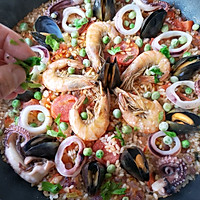
Sprinkle with green beans to taste.
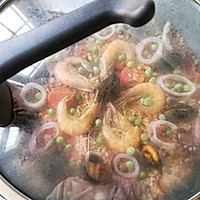
Step 23
Cover and simmer over low heat for 15-20 minutes.
Step 24
Sprinkle parsley on the lid, turn off the heat and simmer for another 3 minutes.
Step 25
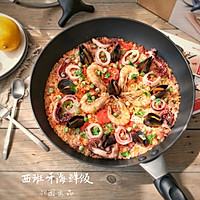
Serve, squeeze lemon juice and mix well to eat!
Step 26
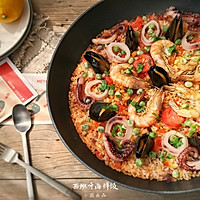
This Spanish-style paella is perfectly displayed in front of us, so enjoy it to your heart’s content.
Cooking tips for paella
1. Do not wash the rice (you can wash the rice without washing). 2. Saffron pregnant women and people with the same menstrual period cannot eat it (curry powder can be used instead). 3. After the second time of collecting the juice, if the soft and hard is suitable, the third time to collect the juice over high heat, if it is too hard, then the third time to collect the juice over medium heat. The final product should be as dry as possible without soup, and it is ideal to have a layer of pot rice.