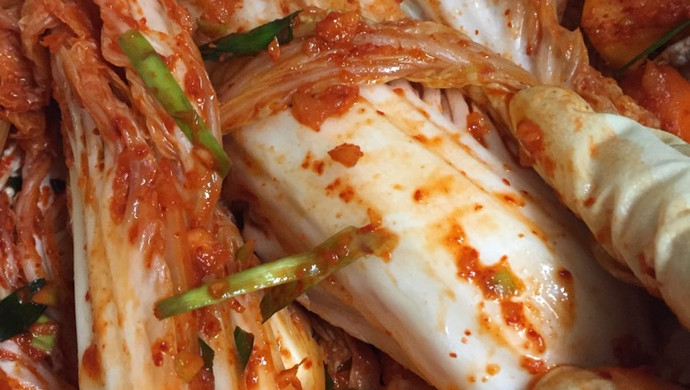
Korean kimchi
I especially love kimchi, and I almost persistently make it myself, looking for all the ingredients every time, and then starting to complete each step ritually. Now that I have come to the United States, the kimchi in the Chinese Super League is extremely unpalatable, so I DIY it myself, and I can’t think that the ingredients are better to buy than in China, such as sea salt such as Korean chili powder and Korean radish.
How to make Korean kimchi
Step 1
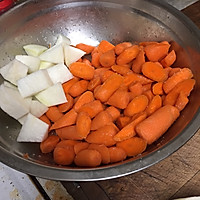
Cut the red and white radish into about the same size cubes, add sea salt and dehydrate.
Step 2
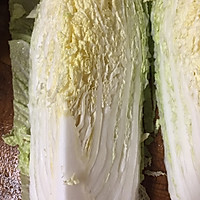
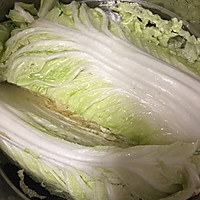
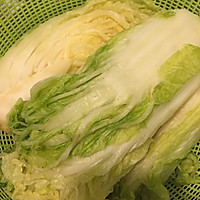
The cabbage is divided into four parts and each leaf is smeared with sea salt to dehydrate
Step 3
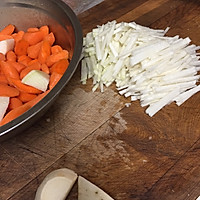
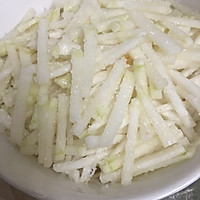
It is best to use Korean radish for white radish, cut a part into shreds, add sea salt and dehydrate
Step 4
Dehydrate the white radish shreds
Step 5
Chinese cabbage can be soaked in salt water for one night to dehydrate
Step 6
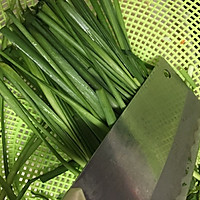
Wash and drain the leeks, try not to have water, and then cut into sections
Step 7
Pick up the cabbage after it is soft, wring out the water, pay attention to protecting the leaves, and the roots can be easily rolled up when they become transparent and soft. ps: Be sure to rinse the cabbage clean, otherwise it will be salty to bitter
Step 8
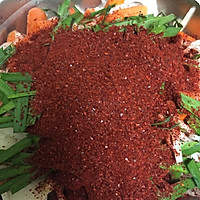
Leek segments, carrots, white radish, and shredded white radish are put together, because they are lazy, and the water is drained, so it is convenient to handle them together
Step 9
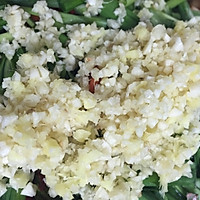
Add ginger and garlic
Step 10
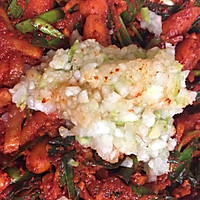
Add apple pear (cut into puree), I choose green apple, but red Fuji is the best, if the pear is Yongxiang pear, the small size is two
Step 11
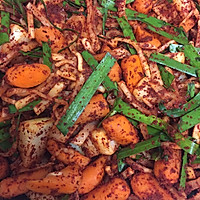
Add the fish sauce and shrimp paste and mix well, then put on disposable gloves to mix the kimchi sauce
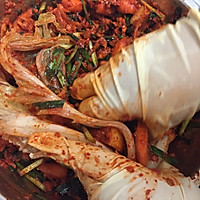
Step 12
Spread the cabbage leaves layer by layer with sauce, then roll them up and put them in jars
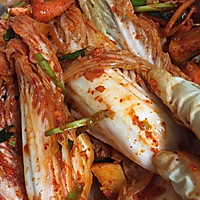
Step 13
If the color is beautiful, you must choose Korean chili powder, the domestic one is not so red, and the kimchi will turn orange instead of red in the later stage
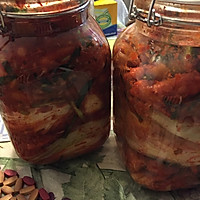
Step 14
A Chinese cabbage is measured in two 2L glass jars
Cooking tips for Korean kimchi
Tip 1. Try to choose apples and pears that are the same size and have enough water, so that you don’t need to boil glutinous rice flour at all, and the sweet ones that come out are mainly spicy pickles; Tips 2. It is best to use button-shaped glass jars, the two 2L ones I bought, 67.5oz, first scald the jars with boiling water, dry them and set aside; Tips 3. I have used domestic white radish, the water is too serious, the Korean radish used this time, I feel that the water is relatively less, the taste may be a little softer, not the kind of crispy