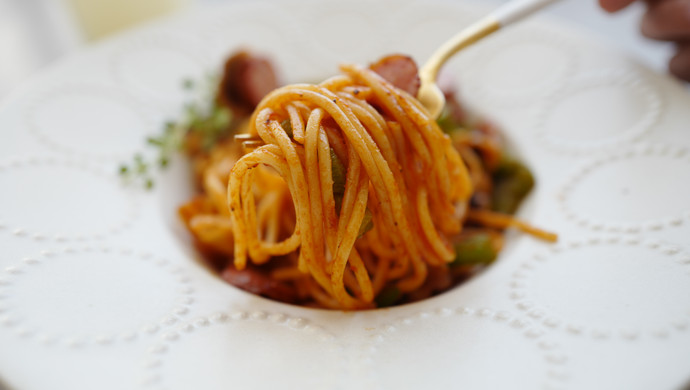
It’s sour and appetizing! It’s a Japanese cuisine of “Neapolitan pasta”
In the culinary world, sometimes it is also about pure blood. For many people, “authenticity or not” is often an inoffensive golden rule. I think it’s just a disappointment to the food. After all, for food, deliciousness is the only criterion, isn’t it? Moreover, the “crossover” and “mix-and-match” in the culinary industry often give new vitality to ingredients, such as “Zuo Zongtang Chicken” active in the United States, “Potato Salad” that symbolizes the Western style of a generation of Shanghai Lao Keller, and “Tianjin Rice”, which is popular all over Japan but no one knows about it in Tianjin…… The charm of food is largely created. As soon as summer arrives, I always crave those sour tastes, such as lemons and tomatoes. Today, I spent 10 minutes making a sour and spicy appetizer “Napolitan pasta”. Sounds like a summer zest in southern Italy? In fact, this is a real “Japanese food”~ “Napolitan pasta” is actually very simple, that is, it is made with mushrooms, onions, and green peppers with pasta. In Italy, using fresh tomatoes instead of tomato sauce is the bottom line of a plate of pasta. In Japan, people are surprised to do the opposite. I remember in “Late Night Canteen”, there was such a conversation about Napolitan pasta. “The ingredients of the Neapolitan pasta are ham and onions. Trendy shops will add mushrooms, and then you have to add green peppers.” “Please give me Napolitan pasta.” “I thought you must have been frightened and didn’t dare to eat anymore.” “It’s not delicious, but it’s addictive.” The original “Neapolitan pasta” can be said to be a “special delicacy”, because the pasta itself is the food of the upper class. At the end of the shogunate and the beginning of the Meiji era, pasta entered Japan along with other Western things. For the majority of Japanese people, this is really a very unfriendly food: the noodles are so hard and it is quite inconvenient to eat with chopsticks. The “macaroni” in pasta first appeared in a Western cookbook published in Japan in 1872, when it was described as “bamboo-shaped udon” and could only be eaten in high-end hotels. The popularity of pasta in Japan is largely due to “Napolitan pasta”. In 1927, a hotel called “New Grand Hotel” was born in Yokohama, Japan. This hotel, which specializes in providing authentic Western cuisine to foreigners, is known as the “mecca of Western cuisine” at the time, and it was also the birthplace of French pudding in Japan. After the end of World War II, the Allies announced the establishment of a takeover General Headquarters in Japan, also known as “GHQ”. The hotel was also within the takeover, and a large number of American officers were staying in it. Soldiers of that time brought ketchup and pasta to serve as rations. At this time, the hotel’s second-generation chef, Shigetada Irie, saw that people were eating only pasta with tomato sauce seasoned with salt and pepper, and thought, “This is too rough,” and couldn’t help but improve the dishes. In the tradition of true Italy, he made the 2.0 version “Spaghetti Napolitan” with fresh tomatoes, garlic, onions and olive oil with chopped parsley and Parmesan cheese. However, at this time, Napolitan pasta was still a high-end delicacy that was difficult for civilians to taste. The reason why it later flew into ordinary Western-style restaurants and became a common delicacy is also thanks to the Yokohama Western-style restaurant “Center Grill”, which opened in 1946. To make a more grounded Neapolitan pasta, the chef replaces the tomato with tomato sauce and the ham with sausage. The affordable version of “Neapolitan pasta” is also gradually becoming popular. Of course, cheap is not enough. In order to become a favorite of Japanese people, “Napolitan pasta” can be regarded as a very hard work. As we all know, the neon people have always been accustomed to eating soft udon noodles, and they don’t look down on chewy pasta at all. Japanese chefs have improved the way they cook Napolitan pasta to make it more enjoyable. Cook it until it is 7 ripe, then cool for 5-6 hours, and cook it quickly when eating. In the minds of Italians, tomato sauce may erase the character of pasta, but in Japan, people use tomato sauce to evoke the smell of fireworks in pasta. This time, I used a “highball” to pair with the Napolitan pasta. Highball actually refers to a cocktail made of carbonated drinks and wine, which first came from European and American countries, but grew up in Japan. The most classic highball is soda with whiskey. Some people say that a highball saved Japanese whiskey. In the fifties and sixties, whiskey was a must-have for an ideal life in Japan, but with the shrinking market and economic changes in the 80s, young people’s interest in whiskey declined significantly. In order to stimulate the market, Suntory, the leader of Japanese whisky, pushed highball to izakayas, fully demonstrating the affinity of whisky. The cheap whiskey corner brand has taken a ride and has become a golden partner for highball. I also made a highball with Japan’s most well-known carbonated drink, Calpis, which is said to be a must-have for home gifts in Japan. The sweet and sour Calpis minimizes the spiciness and intensity of the whisky, making it “cute to death”! On an early summer night with a light breeze, isn’t it enough to have a highball with a Japanese-style “Napolitan pasta”?
How to make Napolitan pasta
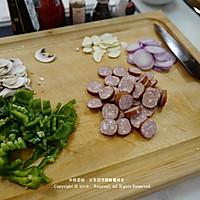
Step 1
Cut all vegetables and sausages and set aside.
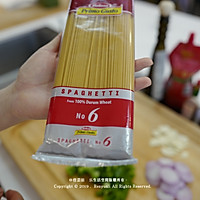
Step 2
6# Pasta boiling pot under water
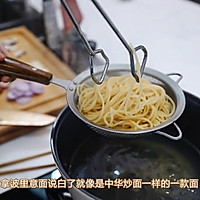
Step 3
Mature for about 7 minutes until slightly firm, remove and set aside.
Step 4
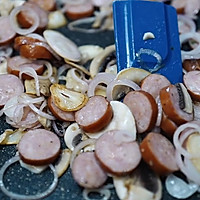
In the wok, heat the pan with cold oil, stir-fry the dried green onions and garlic, then put the sausages and mushrooms in, and finally add the peppercorns, stir-fry the vegetables until the edges are slightly browned, and season with pepper and salt.
Step 5
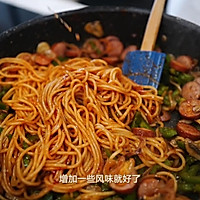
Then add the cooked pasta, stir-fry, add an appropriate amount (a lot) of tomato sauce and stir well, and finally season with chili peppers according to personal taste, and you can get out of the pot.
Step 6
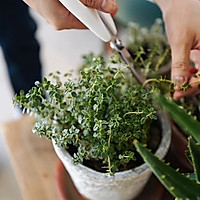
I also cut 2 thyme
Step 7
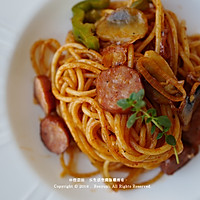
Mix it well in the pasta when you eat it, it tastes great!