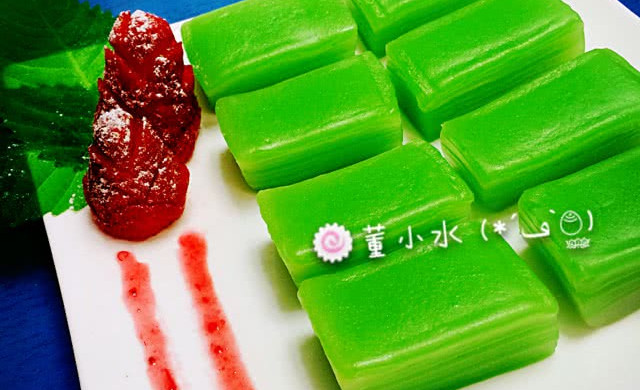
Coconut pandan cake (fresh breeze from the Indian Ocean)
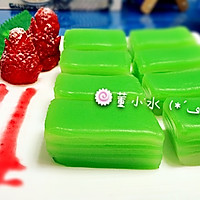
The appearance is very beautiful, white and green, crystal clear and as attractive as jadeite, and it tastes smooth and sticky, sweet, and super Q. After a little design and plating, it is a work of food art.
The practice of coconut pandan cake (a fresh breeze blowing from the Indian Ocean).
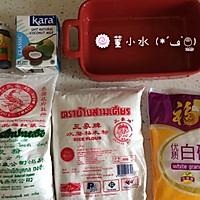
Step 1
Material summary. Even the packaging is easy for parents to purchase.
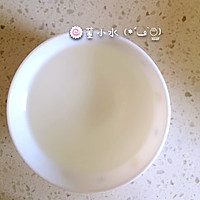
Step 2
Melt the sugar in warm water
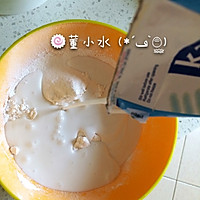
Step 3
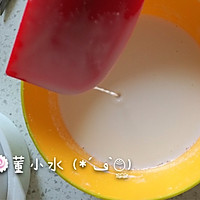
Tapioca flour Mix sticky rice flour through a sieve, then pour in the coconut milk and stir slightly.
Step 4
Add the melted sugar water to the coconut milk paste (mix in the second and third steps) and stir well until there are no particles.
Step 5
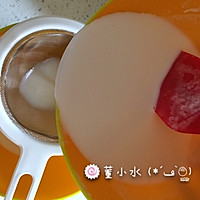
Sift the batter. (At this time, pour more water into the steamer and bring to a boil over high heat.) )
Step 6
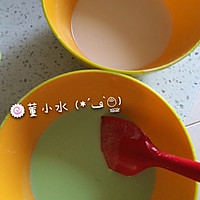
Pour 295g of the batter into another container and stir well with 3 drops of pandan essence (the shade of color can be adjusted by yourself).
Step 7
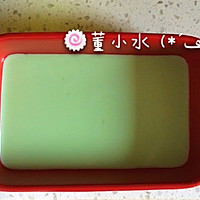
Pour 58g of pandan liquid into a bowl and shake it gently from side to side to evenly cover the entire bottom of the bowl.
Step 8
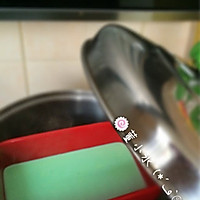
Put the bowl flat in the boiling steamer, cover the pot and steam over high heat for 3 minutes.
Step 9
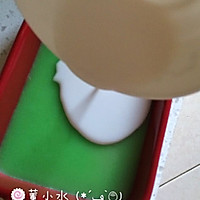
Take out the bowl, at this time the surface of the pandan batter has solidified, then pour in 58g of coconut milk batter, shake it from side to side to side, so that it evenly covers the entire pandan batter layer, and continue to put it back in the steamer and steam over high heat for 3 minutes.
Step 10
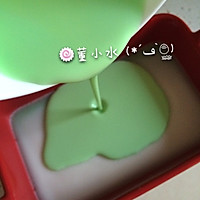
In the same way, a layer of pandan batter and a layer of coconut milk batter are alternately steamed.
Step 11
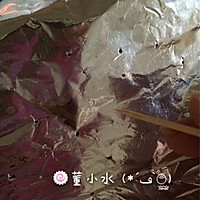
After pouring the top layer of pandan batter, cover it with a layer of tin foil and prick a few small holes with a toothpick (to prevent water vapor from dripping on the surface of the cake to form pits), put it back in the pot and steam for 12 minutes. Turn off the heat and remove from the pan.
Step 12
After cooling, remove the mold and cut into pieces.
Cooking techniques for coconut-flavored pandan cake (fresh wind blowing from the Indian Ocean).
When I demolded, I directly started to buckle it out gently, it was full of elasticity and not damaged, and it was easier to cut after cooling.